
The expression "breaking the ice" sounds very familiar to us, but you probably don't know it. It was originally used to describe a person who is as unreasonable as ice, until Shakespeare used it to advance a tense plot.

Origin and evolution of phrases

The expression "breaking the ice" first appeared in "The Lives of the Greeks and Romans" translated by Sir Thomas North in 1579. In the context of that time, it was purely a description of a physical action, which meant "breaking the ice" in order to open a channel for ships. It was a practical navigational term.

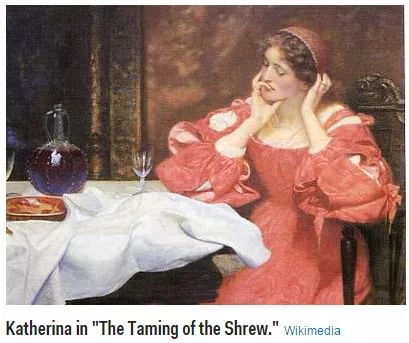
Shakespeare was not the creator, but he cleverly introduced this phrase into the humanistic category. In the play "The Taming of the Shrew", he used "break the ice" to allude to the heroine Katharina's cold and unapproachable character like ice, and then gave it the metaphorical meaning of "breaking the deadlock and opening up difficult communication". This usage has been spread since then.
Poetic "caught off guard"
Shakespeare often sought more poetic expressions in the use of language. For example, when describing emergencies, he did not choose simple single words, but used phrases such as "all of a sudden" (which means to be caught off guard). These structures are more rhythmic and visual than single words.
His emphasis on musicality and dramatic effect of language is reflected in this choice. In stage performances, such phrases can attract the audience's attention more quickly, vividly and intuitively convey the suddenness of the event, as well as the character's stunned state, thus freeing the dialogue from the ordinary banality of daily life.
Deepest in my heart
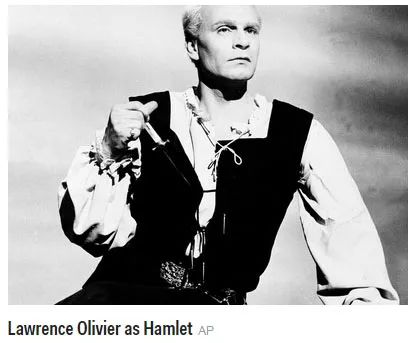
In "Hamlet", the prince said to his friend Horatio, "There is something in my heart…" In these words, "heart's core" is directly translated as "the core of the heart." It is a particularly specific image and meaning that points to the deepest and deepest part of the heart and emotions that cannot be touched at all, highlighting the sincerity and profundity of his words.
"This expression evolved into the more commonly used 'in my heart of hearts' (that is, deep in my heart). Although the word form has changed, the core meaning has not changed. They are all used to refer to people's most secret and sincere thoughts and feelings, and it has become a classic phrase in English to express profound emotions."

Not all that glitters is gold
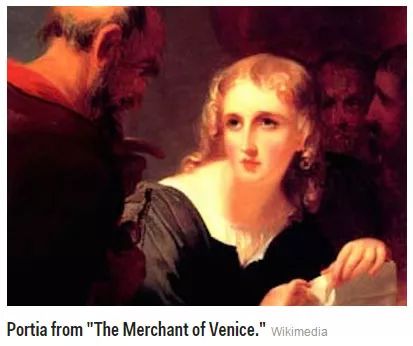
In "The Merchant of Venice", Portia's ancestors set up three boxes of gold, silver and lead for suitors to choose from. On the gold box was engraved a warning to the world, which read: "All that glitters is not gold", which is followed by the sentence "Don't let insects in China's coffin".
Shakespeare uses this plot to clearly convey a universal truth, that is, the appearance of brilliance is often deceptive, and the true value is often hidden in the plain appearance. This sentence transcends the scope of the plot and evolves into a proverb that people often use when judging the essence of things.
blindness of love
The concept of "love is blind" is widely known, deeply rooted in people's hearts, and speaks accurately. Its earliest written records can be traced back to the works of Geoffrey Chaucer. In his works, he wrote: "For he who is in love is blind all day long, and may not be able to see."
In works such as "The Two Gentlemen of Verona", Shakespeare repeatedly used and promoted this phrase, making it popular and firmly rooted in English culture. Based on the experiences of the characters in the play, he vividly demonstrated the common human observation that people immersed in love often lack rational judgment.
transgression in drama

In "Henry IV", Shakespeare used the words of his characters to raise a rather pointed question, that is, did the prince ever feel that he was superior to the king in some aspects? Such an act of blatantly exploring the subtle power relationship between the king and his heir in a play required great courage at the time.
This implicit challenge to authority and the display of contradictions in power inheritance not only add to the tension of the drama, but also give the audience space to think about the relationship between politics and family. It demonstrates the profound nature of Shakespeare's plays that transcend entertainment and touch on core social issues.
How did Shakespeare endow these phrases that we still use today with magical power? Which phrase you can think of resonates most strongly with you, or is used most frequently in your life?