
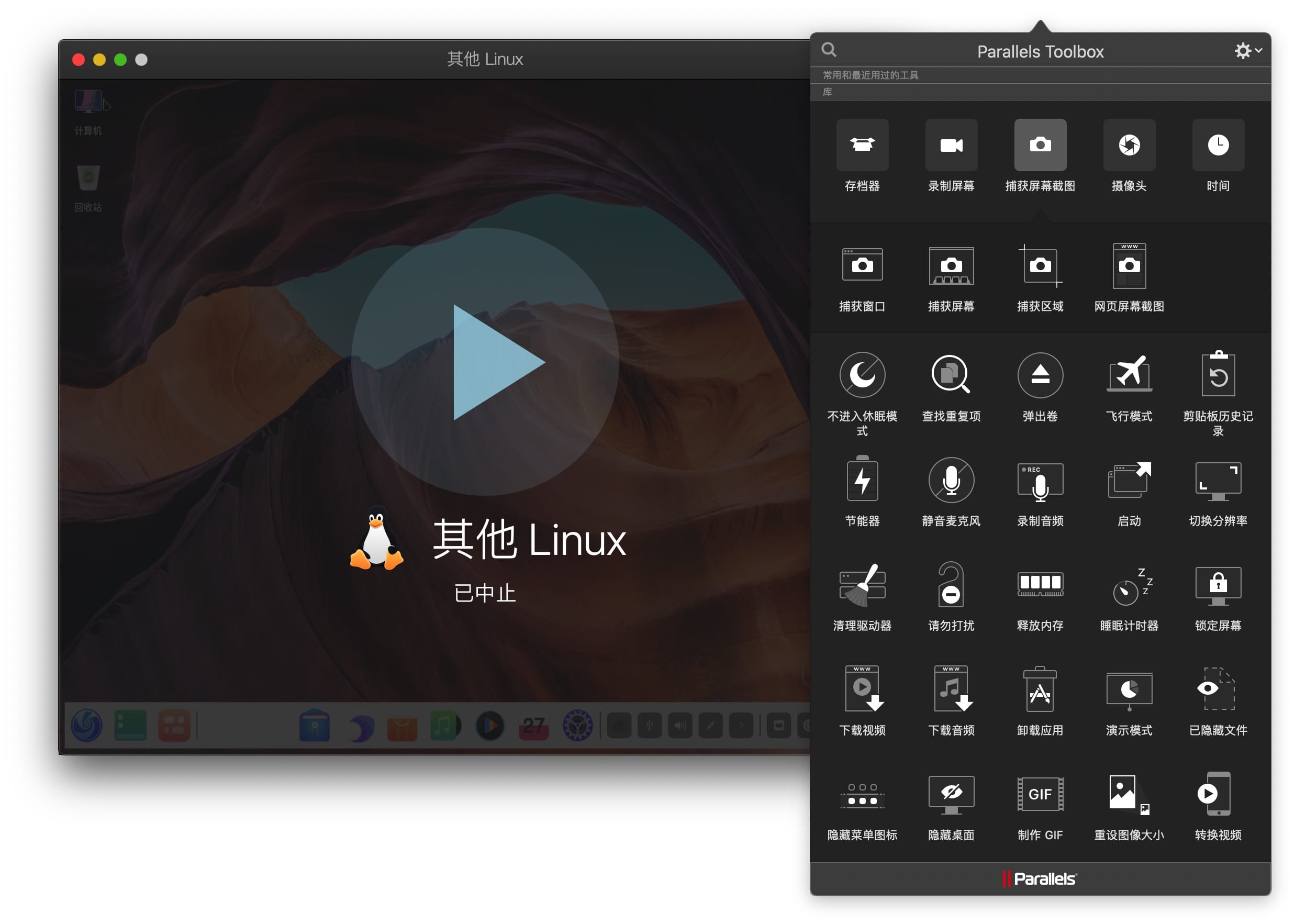
The new version of Parallels Desktop brings a relatively strong performance on M1/M2 Mac. However, its installation and activation process, especially the step involving turning off SIP system protection, has caused a lot of users to feel troubled and confused.
The necessity of turning off SIP
SIP is a core security mechanism of macOS, which blocks software from modifying protected system files and directories. Starting from Parallels Desktop 18.0.1, because the software needs to be deeply integrated and achieve certain advanced functions, its activation patch needs to touch these protected areas. If SIP is not turned off, the patch will not be successfully applied, causing the software to be unable to be activated normally and can only run in trial mode with limited functionality.
This is not a requirement unique to Parallels Desktop. Many professional tools that require underlying system permissions will encounter similar thresholds on macOS. For ordinary users, temporarily turning off SIP actually adds a security risk and psychological threshold, but this is usually a step that cannot be avoided when running such modified versions of software.
Crack tutorial and system time modification
Among the many cracking methods circulating on the Internet, modifying the system time is one of the more common steps. For example, you have to reset the Mac system date to September 1, 2021, and then start the software to regain the trial period. This operation relies on the time verification mechanism of the software trial authorization, and its essence is to deceive the software so that the software feels that it is still within the valid trial period.
It should be noted that changing the system time may cause a series of side effects. For example, it may affect system logs, cause applications that rely on network time to be confused, and even make certain online services unavailable. This is only a temporary and unstable implementation path, not a solution that will work once and for all.
Using launcher to bypass verification
There are some cracking solutions that provide tools called "launchers" or "infinite trials" to prevent the system time from being repeatedly modified. Some users can drag this launcher to the dock and use the launcher to open Parallels Desktop. The function of this launcher is to intercept or bypass the trial status check in the software.
Although this method is convenient, users should be alert to its source. The launcher may be mistakenly reported as a threat by security software, such as a pop-up window that says "it will cause harm to your computer." This is generally because its behavior pattern (similar to injecting processes and changing memory) triggers system protection rules. It does not mean that it is definitely a virus, but it must be obtained from reliable channels.
Version selection and compatibility considerations
For users using Apple Silicon Mac, you have to choose a version that explicitly supports the M1/M2 chip, such as Parallels Desktop 18.0.1 and higher. Old software versions cannot run on the new architecture. At the same time, the Windows 11 ARM version image it brings is legal and optimized, and can fully bring out the hardware performance.
If the current version encounters difficulties in cracking, such as the patch being declared invalid or an error reporting, then returning to a slightly earlier stable version can be regarded as a practical strategy. For example, the cracking solution for v17.1.0 may be more mature at that time. Users have to weigh the new features of the software and the stability required for cracking, and must not blindly pursue the latest version.
Core application scenarios of virtual machines

The core value of this software is that it allows Mac users to smoothly run Windows, Linux and many other operating systems without restarting; for developers, this means that multiple browser versions such as Chrome 93, Firefox 103, IE 11 and Edge can be tested on one machine, greatly improving the efficiency of web compatibility testing.
Designers and engineers will also benefit. They can perform coding work in Visual Studio in a virtual machine, design within the AutoCAD application, and use the Windows environment to run certain industry software or automation tools that are only available on this platform, thus achieving seamless integration of workflows on a single device.
Security and copyright risk reminder
Carrying out software debugging and testing in a separate virtual machine environment is itself a safe and best practice. It can isolate potential risks and prevent them from affecting the host system. However, using cracked software itself introduces uncertainty, and you may encounter situations such as software instability, failed updates, and even the risk of containing malicious code.
From a legal and ethical perspective, the use of pirated software infringes upon the intellectual property rights owned by developers. Parallels Desktop has invested a large number of resources in development and adaptation work, especially in-depth optimization for Apple Silicon. Supporting genuine versions not only provides stable services and security updates, but also respects software development work.
If you need to use Windows software on Mac, will you bear the potential risks caused by cracking for convenience, or will you choose to purchase a genuine license to obtain long-term and stable services? Feel free to share your opinions and experiences in the comment area.