When many players encounter a new shooting game, the first obstacle they encounter is often language issues, which has a direct impact on their in-depth understanding of the game content and their enjoyable experience.
The importance of language support
There is a multiplayer online shooting game that targets the global market. Language localization is the first bridge between players and the game world. Take this game that supports cross-platform play on mobile phones, tablets, and PCs. If it lacks official support for Chinese, Chinese players will encounter difficulties in understanding character skills, weapon attributes, and tactical objectives. This is not just a matter of text translation, but also involves the smoothness of menu navigation, tutorial guidance, and community communication. As a result, the completeness of the game experience is seriously reduced, and players may spend a lot of time exploring the interface operations.
The lack of Chinese support actually creates an unnecessary barrier between players and exciting game content. Especially in fast-paced team competition situations, clearly and quickly understanding battlefield information is the key to victory. Once players slow down their reactions or misunderstand tasks due to language barriers, frustration can quickly build. This lack of design will make a considerable number of potential players decide to give up during the entry-level period, no matter how excellent the graphics and gameplay of the game itself are.
Potential fragmentation of cross-platform experience
Players using different devices can compete on the same field, which is one of the core selling points of this game. However, the lack of language support may cause the player group to be fragmented in terms of social interaction and collaboration. For example, Chinese players may form small groups on their own because the interface is in English, thereby reducing integration with other player communities around the world. This "invisible partition" due to language deviates from the original intention of the game to pursue seamless cross-platform battles.
When actually conducting team operations, communication is the soul attribute of teamwork. If members of the team are unable to effectively communicate tactical content due to language barriers, then the convenience brought by "cross-platform" will be greatly weakened. As for the game, it provides a rich variety of characters and weapon systems, which requires precise and careful cooperation between players. However, when basic instructions cannot be conveyed accurately, even with advanced technological graphics and a rebalanced competitive environment, it is difficult to make up for the fundamental flaws in teamwork.

Actual barriers to accessing game content
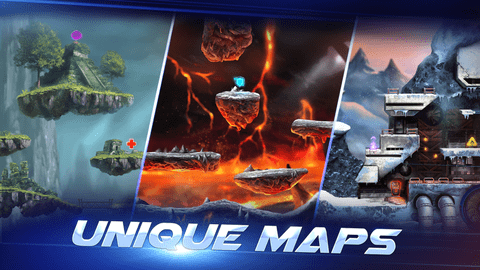
The game provides modes with various characteristics, such as team competition and capture-the-flag battle. Each map also has its own unique tactical points. If there is no Chinese translation, players will have to rely on community guides or video tutorials to learn, which increases the learning cost. If the upgrade path of the equipment system in the game and the detailed description of character skills can only be understood with the help of a non-native language, it will easily lead to misunderstandings and affect the player's growth plan and resource allocation.
For games, customizing equipment and appearance is a big part of the fun. However, if the complex assembly interface is all in English, it will deter many players. They may choose the default configuration and be unable to enjoy the strategy brought by in-depth customization. For regularly updated new content and event announcements, if players cannot accurately understand them at the first time, they will miss participation opportunities and rewards, and their gaming experience will become incomplete and lagging.
Indirect impact on a fair competitive environment
The game emphasizes fair competition, there is no pay-to-win mechanism, and victory or defeat depends entirely on strength and strategy. However, language barriers may themselves become an "unfair" factor. Players who can read English fluently have an inherent advantage in obtaining information. They can more quickly grasp the weapon value adjustments or new character mechanisms after the version update, and then seize the opportunity in the competition.
This gap caused by language skills rather than gaming skills destroys the purity of the competitive environment. Among opponents with a considerable level of strength, perhaps just because one party is not familiar with a certain keyword in the interface prompt, they will make a wrong judgment and lead to failure. If this continues for a long time, some players may feel that the competition is not completely fair, which will have an impact on their enthusiasm for long-term investment in the game.
Community ecology and the limitations of long-term vitality
The longevity of a multiplayer online game depends, to a large extent, on its active community. Without official Chinese support, it will be difficult for the game to form an organized and thriving player community in Chinese-speaking markets such as China. The community is the soil for sharing tactics, organizing competitions, and creating content. Its shrinkage will directly lead to a decline in the overall vitality of the game.
Players cannot easily obtain information and discuss gameplay, which reduces the motivation to share and spread the game. The impact of online activities conducted by game companies will also be limited due to language barriers. Without a large community that speaks the same language, the social nature and long-term stickiness of the game will be difficult to build.
Trade-offs and trade-offs from the manufacturer’s perspective
From the perspective of game developers, the lack of support for Chinese may be due to cost control, or it may be a decision based on market priorities. However, in 2023, ignoring the large Chinese player base is obviously a business decision worth considering. Compared with the localization costs required to add language packs, compared with the possible growth in user numbers, revenue increases, and community expansion, its return on investment is often very significant.
Especially in competitive games, the player market is active in China and has considerable spending power. Leaving aside the matter of providing Chinese support, not only did we not see any direct revenue, but we also lost the opportunity to spread this game culture more widely around the world. For a game that wants to establish a long-term brand and operate e-sports events, this may become a strategic shortcoming.
When you are faced with choosing a shooting game that transcends multiple system platforms, will you give up without hesitation because it does not have Chinese auxiliary support, or will you try to overcome the language barriers and experience it? Welcome to the comment area to share your views, opinions and experiences.