In the past week, the smart TV market was particularly lively and noisy. Several major manufacturers were making frequent moves. New products and new marketing events were continuously launched one after another, attracting the attention of numerous consumers to a great extent.
A collection of essential applications for large screens
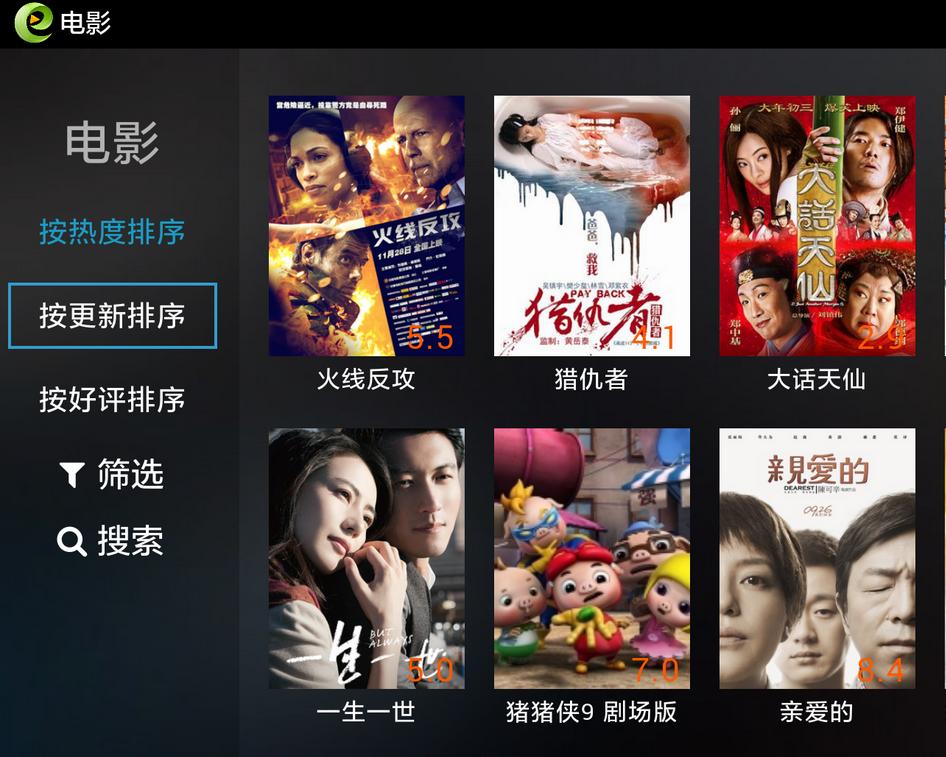
For users who have just purchased a large-screen smart TV, finding the right application is troublesome. The resources on the Internet are scattered and their quality is also different. It is extremely time-consuming to find and test each one by yourself. A set of carefully selected application collections can directly solve this problem, saving users the process of groping.
Such collections often include core categories such as live streaming, on-demand, education, and tool software. Some advanced gameplay also includes using a TV or box for offline downloading. Users can obtain high-definition film and television resources without turning on the computer as long as they connect an external hard drive, which expands the functional boundaries of TV equipment.
Turn your mobile phone into a versatile remote control
The operation of a single-function traditional infrared remote control is not convenient enough. Software such as Wukong Remote Control turns a smartphone into a control center with powerful functions. It can use Wi-Fi networks to connect to TV devices to achieve richer interactions.
It can not only perform basic operations such as turning on and off the phone and adjusting the volume, but also supports intelligent control methods such as touch sliding screen and voice input. More importantly, it can manage multiple devices in the living room and bedroom at the same time, allowing users to control the entire household appliances with just one mobile phone, improving convenience.
Professional player optimized experience
The playback software carried by TVs with smart functions often has limitations in format support, and the decoding capabilities are not powerful enough. When users play high-definition videos downloaded from the Internet, they often encounter situations where they cannot open them or freeze, which affects the viewing experience.
The modified version of MX player, which is specially optimized for TV hardware, is compatible with a variety of mainstream packaging formats including MKV, MP4, etc. Its advantage is that it can automatically match the best decoding solution based on the device processor model to ensure smooth video playback, and the modified version eliminates advertising interference.
A browser designed for TV
Ordinary web browsers have a poor experience when used on TVs. The text is small, the layout is messy, and the operation is difficult. Since the beginning of its design, the TV browser has taken into account the use of large screens and remote controls, and adapted the interface and interaction.
It aggregates the TV pages of mainstream video websites, allowing users to directly search and watch content across the entire network. At the same time, it allows users to customize favorites and add local news channels or favorite vertical websites to the homepage to achieve personalized content aggregation.
One-stop application management platform
The Android TV system is relatively open, but there are not many safe and reliable application channels. If users install software from unofficial channels, they are very likely to encounter problems such as version incompatibility and malicious programs, so there is a certain degree of risk.
TV app stores like SofaButler play the role of a platform. They review and bring together a large number of genuine software and games suitable for large screens. Users do not need to jump back and forth between many websites to search. The entire process of search, download, installation and update can be completed in one application, which is simple and convenient to manage.
The choice behind the excitement of the market

Last week, Hisense released a new Internet TV, Skyworth launched OLED products, and other brands also made new moves. The fact that manufacturers actively promote new products can indeed give consumers more choices. However, at the same time, it is also very likely to make people feel dazzled.
As for various new concepts and new products, consumers should actually pay more attention to their actual needs. Should they pursue the ultimate picture quality, or should they pay more attention to the richness of content and the ease of use of the system? There are differences in the systems and content ecology of products produced by different brands, which will directly affect the long-term user experience.
For ordinary families, when purchasing a TV during the spring home appliance sales season, what specific functions do you value most? Is it screen rendering technology? Are they built-in content resources? Or is it the linkage ability of the entire smart home?