Sometimes, a seemingly "mundane" system update may actually become the real starting point of the technology wave in the next ten years.
Underlying refactoring to pave the way for the future
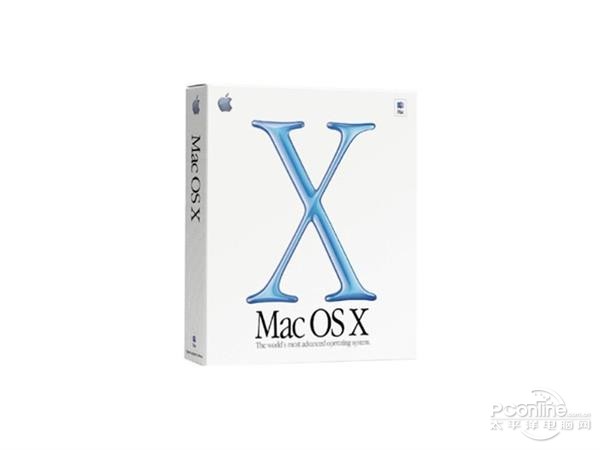
Compared with 2009's Snow Leopard, on the surface, it is an update aimed at fixing bugs and improving speed. The person who was the head of software engineering at Apple at the time also frankly stated that 90% of the team's energy was placed on optimization matters. However, this is precisely where its strategy lies. Apple has chosen to suspend feature stacking and concentrate on solving fundamental problems at the architectural level.
This focus clears obstacles for subsequent development. For example, it has fully switched to a 64-bit kernel. This change does not benefit all users immediately, but it paves the way for the explosive growth of hardware performance. Developers no longer need to worry about the memory limitations of 32-bit systems, and the software can be designed to be more powerful.
Completely unleash the potential of hardware
For 64-bit transformation, its core value lies in breaking through the memory bottleneck. In the case of 32-bit systems, the memory that can be used by a single application is limited to 4GB, which imposes extremely serious constraints on the performance of professional software. Snow Leopard raised the theoretical upper limit to 16 billion GB. Although there was no hardware to support it at the time, it opened up endless possibilities for the future.
This shows that large-scale applications such as video editing and 3D rendering can run more efficiently. Users may not experience the new features immediately, but their Mac computers have become smoother and more stable when running complex tasks. This provides a key reason for professional users to continue to choose the Mac platform.
Opening the door to general computing
Snow Leopard introduced OpenCL technology, which is an easily overlooked but far-reaching innovation. It allows developers to easily use graphics processors to perform general calculations, such as video encoding or scientific simulations. Before this, the powerful computing power of GPUs was mainly limited to games and graphics rendering.
This technology gave the Mac a unique advantage when handling certain computing-intensive tasks. It laid the seeds for the subsequent development of GPU-based machine learning and high-performance computing applied to the Mac, making the Mac not only a creative tool, but also a computing tool.
A leap in browser performance
The Safari 4 browser included in the system has been significantly improved. Apple claims that JavaScript running speed is 7.8 times that of Internet Explorer 7 at that time. This value intuitively demonstrates the improvement in user experience caused by the underlying optimization of the system. Web applications respond more quickly and the network experience is smoother.
The browser introduced the Top Sites function, which was the early form of today's browser start page. These improvements are not part of the core of the operating system, but they reflect Snow Leopard's idea of improving the overall user experience, which is to optimize every key component.
A key step to integrate into the corporate ecosystem
For the first time, Snow Leopard provides Mac with native support for Microsoft Exchange services, which shows that Mac users can synchronize company emails, calendars, and contacts without any hindrance, without installing third-party software or complicated configurations. This behavior greatly improves the usability and attractiveness of Mac in corporate environments.
In the past, Macs were often seen as consumer products that were incompatible with business environments. This change has prompted Mac to gradually penetrate into business and education areas, expand its user base, and lay the foundation for the development of the Mac ecosystem in a diversified direction.
A preliminary study on design concepts and AI
The continuation of the simple design philosophy is the rewriting of system applications. The QuickTime
What is even more surprising is its early exploration and exploration of AI. The system uses machine learning technology to improve the experience of text recognition and copying of PDF files, resolving the troubles caused by confusion when copying text from a scanned PDF. This example of application practice, called "micro-AI", proves that this update hides cutting-edge technical thinking.
Let me ask you back, when you look back on the development of technology, what updates do you think that may seem "mundane" to people, but have actually had a very profound change in the way we use technology? You are welcome to share your personal insights in the comment area. If you feel that this article has inspired you, please give it a like and support.