
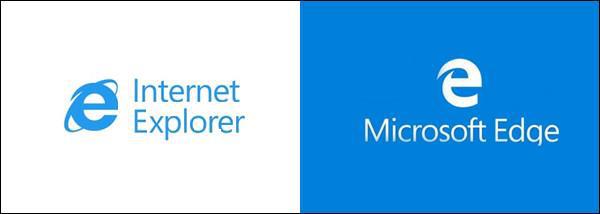
The preview version of the Edge browser released by Microsoft in April 2019 received great attention. The key point is that it completely abandoned its own technology and turned to the core of its competitors. This means that a browser competition that has lasted for many years has come to an end due to Microsoft's proactive "core change". Behind it is a major change in product strategy.

The embarrassing situation of market reaction
When Microsoft first launched the Edge browser, it was full of expectations, hoping that it could replace the ancient IE. However, the situation reported by the market is extremely disappointing. Most users generally feel that its speed is not fast enough, and its built-in functions have limitations. Although it supports extension plug-ins, the number of options available in the official store is pitifully small, which is far from meeting daily use needs.
Stability issues often caused trouble for early users. For this reason, this browser, which Microsoft had high expectations for, ended up playing the role of just a "tool for downloading Chrome or Firefox" in the hands of many ordinary computer users. Such an embarrassing positioning caused Edge's market share to hover at a low level for a long time, making it difficult to achieve a breakthrough.
The market game of early browsers
The story about browsers goes back to a much earlier period. In the mid-1990s, when the Internet was just emerging, the number of computers that could operate online was quite limited. At that time, Microsoft's IE browser existed. At the beginning, it was just an optional item in the Windows 95 Plus system package, and it was not the kind of existence that was absolutely irreplaceable.
However, it didn't take long for Microsoft to realize the importance of the browser. Since IE3, Microsoft has invested a lot of energy in research and development, using technical methods such as reverse engineering to create a version with powerful functions. It began to support plug-ins, more advanced encryption technology, and dynamic images, and its purpose was to challenge the market leader at the time head-on.
Technology iteration and performance competition
Due to the release of IE4, competition has further intensified. It has shown great strength in terms of startup speed, completeness of web page rendering, and support for new technologies, providing users with more choices. Such rapid improvements in performance have had a significant impact on the market structure at that time.
However, rapid iteration also leads to hidden dangers. With the widespread popularity of IE5, many security agencies have discovered a large number of hidden security vulnerabilities. This is the first time that Microsoft has launched a "service pack" to specifically carry out large-scale security updates for browsers. Browser security issues have begun to receive unprecedented attention.
Emphasis and imbalance of functional evolution
Subsequent version updates showed Microsoft's swing in strategy. For example, the main improvements of IE5.5 bundled in the Windows Me system focus on security and printing functions. However, at the level of other functions that users are more likely to perceive, innovation appears to be lacking and has been criticized as "lackluster."
In the period of entering IE10 and IE11, Microsoft launched a dual-version strategy. The desktop version was steadily updated. However, the Metro version designed for touch devices removed major technologies such as Flash in the early stages and vigorously promoted HTML5. However, due to the low acceptance of Windows 8 in the market, this version did not succeed. Instead, it was criticized by users because of its lack of functions.
Trials and dilemmas in the new era
When Windows 10 was released in 2015, the new Edge browser was officially unveiled, aiming to completely replace IE. It brought a more modern interface and performance promises. However, its ecological construction was extremely slow. By 2017, there were still only more than a hundred plug-ins available in its official extension store.
These situations are in great contrast to the ecology of browsers such as Chrome, which have tens of thousands of extensions. The lack of rich extensions means that it is impossible to meet the personalized needs of users, and it is also difficult to create stickiness in usage habits. Even if the core performance is not bad, the lack of ecology directly leads to the loss of users.
The strategic significance of core replacement
The kernel replacement in 2019 was a key strategic shift for Microsoft. At that time, it gave up developing its own kernel and instead switched to using the Chromium kernel, which has the same origin as Chrome. The most intuitive benefit of this is that compatibility has been greatly improved, which means that countless users can directly install and use a large number of Chrome browser extensions.
This change fundamentally resolves the long-standing "ecological desert" problem of the Edge browser. It no longer needs to build its own extension store from scratch, but directly enters the mature global ecosystem. This has laid the most critical technical and ecological foundation for Edge's subsequent significant recovery in market share.
Looking back on the entire process of Microsoft's browser starting from IE, going through Edge, and finally changing the core, do you think a technology giant should always maintain independent research and development of all core technologies, or should it embrace the open source ecosystem and put user experience first? Welcome to share your opinions in the comment area. If you think this article is helpful, please also like it to support it.