After all, voice assistants are about to be fully integrated into computers. Such a situation is likely to change the basic way we interact with machines.
Industrial background of technical cooperation
Intel's partnership with a speech recognition company is no accident. As voice interaction on mobile devices becomes more and more popular, computers have become the last important frontier that voice assistants urgently need to conquer. Growth in the PC market has begun to slow, with new types of noteworthy features eager to drive consumption and upgrades.
This cooperation deeply combines top-notch speech recognition algorithms with the world's mainstream computing chip hardware, providing standardized solutions for the entire PC industry. This lowers the threshold for computer manufacturers to independently develop speech technology, and is expected to accelerate the popularity of speech functions in various computer products.
Core advantages of Nuance technology

The technology that is integrated into the whole comes from a company that occupies a leading position in the field of speech recognition. Its core technology focuses on the ability to process powerful environmental noise reduction. This ability can accurately capture the instructions given by the user in common noises such as noise noise caused by office conversations and the sound of keyboard typing. This is of vital significance for computers used in complex environmental conditions.
This technology also has a low-power voice wake-up function, which means that even if the computer is in sleep or locked screen state, the dedicated low-power chip area is still monitoring the "wake word" at all times. The user does not need to touch the mouse and keyboard, but can wake up the computer and issue instructions just by sound, achieving a practical "contact-free" startup.
Reshaping the computer user experience
The first to change basic operations will be computer voice assistants. Users can use voice commands to open applications, search for files, adjust system settings, and browse the web. For example, when processing documents, say "Open last week's budget report", which is faster than manual search.
Its deeper impact is reflected in the integration of workflow. In the future, users will have the possibility to record key points and generate to-do items while conducting voice command assistant operations while conducting video conferences. Furthermore, or when editing videos, control the timeline in a precise manner through voice, and this multi-tasking parallel processing situation will improve efficiency.
Potential impact on computer hardware design
The integration of voice functions will lead to innovations in computer hardware design. In order to receive speech better, the microphone array design of laptops will be more particular, and its location and quantity may be optimized. Desktop computers may also be equipped with standard or recommended external high-sensitivity microphones.
If the voice processing chip wants to achieve low power consumption, the motherboard design must provide it with an independent power supply area and an independent circuit area. This move involves the power consumption management of the entire machine and is also related to the heat dissipation design. Manufacturers must achieve a balance between traditional computing units and new dedicated voice modules in a compact space.
Industrial Competition and Ecological Pattern
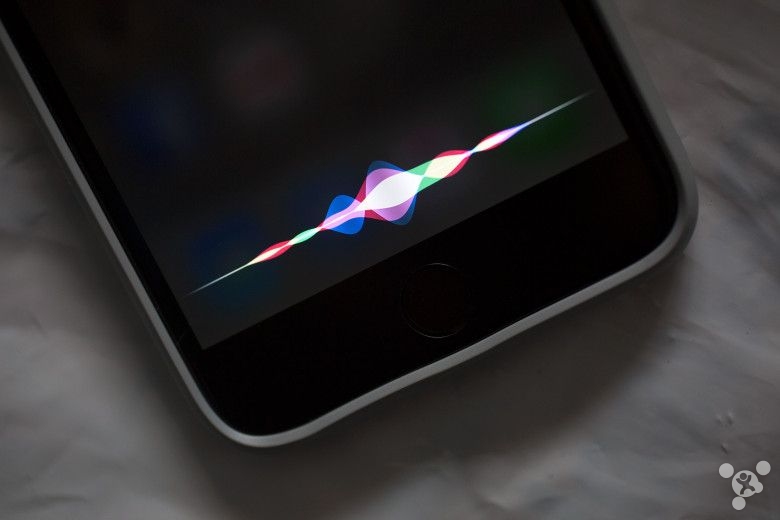
This move by Intel has led the battlefield involving voice assistants from mobile to desktop. This action has had a direct impact since then and changed the original competitive environment, including existing computer voice assistants such as Apple's Siri and Microsoft's Cortana. It is now easier for third-party manufacturers to obtain top voice solutions, thus having more diverse choices.
Will this be the case? This may push Apple to accelerate the in-depth research and development of its desktop Siri, thereby strengthening its ecological barriers of integrating software and hardware. Microsoft, on the other hand, may focus more on optimizing the compatibility between Windows systems and various voice assistants in an effort to consolidate its platform status.
Challenges and future prospects
In a public office environment, accuracy still faces a test. Multiple people talking at the same time, as well as sudden phone ringing and other situations, are very likely to cause false triggers or recognition errors. How to distinguish whether the user is talking to the computer or talking to colleagues is a practical problem that must be solved.
What follows is privacy and security concerns. Will computers that are always monitoring the environment record and upload data? How to define the boundary between local processing and cloud processing? Vendors must clearly explain to users where data flows and provide physical switch options for the hardware to build trust.
Which operation that seems complicated and trivial at the moment are you most looking forward to using your computer voice assistant to accomplish? Is it file management, multimedia control, or linkage with other smart home devices? Welcome to share your thoughts in the comment area. If you find this article inspiring, please like it to support it.