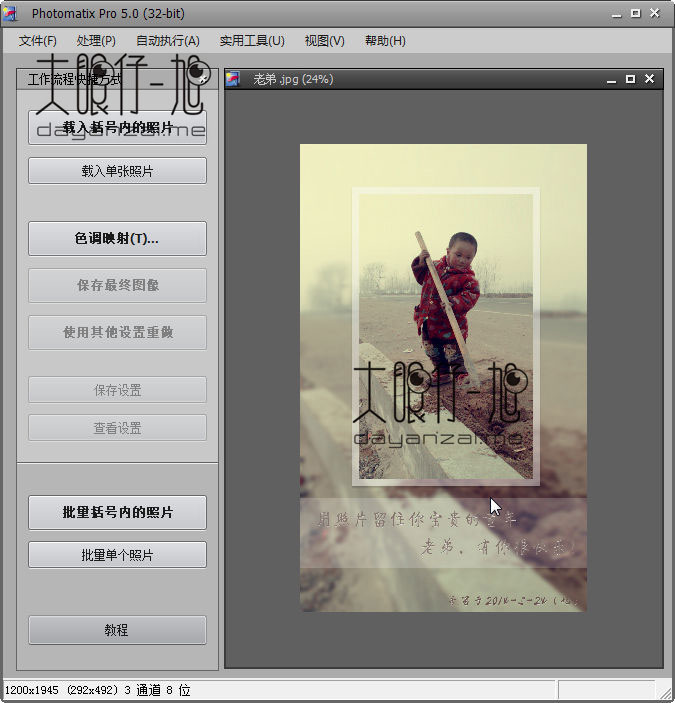
It is not difficult to make a picture larger or smaller. However, when faced with dozens or even hundreds of pictures that need to be processed uniformly, relying on manual methods will become an extremely cumbersome task that consumes time and energy.
Efficiency Advantages of Batch Processing
During our daily work, we often have such a need, that is, to get a batch of product pictures, make them into a uniform size and upload them to the online store, or to batch compress the life photos on the mobile phone in order to save storage space. If you manually use basic software to process one by one, not only will the steps be repeated, but there is also a high probability that errors will occur. Tools such as Light Image, for example, have the function of supporting image batch resizing and format conversion. They can import hundreds of images at one time. After setting the relevant parameters, they will be automatically executed, thus shortening the work that originally took hours to complete to just a few minutes.
First of all, this efficiency improvement is particularly obvious for photographers, e-commerce operators, and content editors, who need to frequently process images. Secondly, let’s say there is a blogger who prepares images every week for publishing content on multiple platforms. Then, different platforms have different requirements for the size and format of images. Finally, batch processing capabilities enable multiple versions to be generated quickly, eliminating the need to switch back and forth between different software.
Preset configurations and customization flexibility
Many image processing software come with preset sizes that are common on the market, such as avatar size for social media, cover image size, or resolutions with standardized characteristics suitable for printing. Tools such as Light Image often have configuration files such as "email" and "web publishing" installed in them, and users can use them with one-click selection. This simplifies the operation for ordinary users who are not familiar with the specific pixel requirements.
At the same time, the software also allows users to create and save their own configuration files. If your team has fixed size and compression rate requirements for promotional materials, you can save these parameters as a custom configuration, and call this configuration directly when processing new images next time. This ensures that the team's output content specifications are consistent without having to reset them every time.
Format conversion and multi-scenario adaptation
There are many types of image formats such as JPEG, PNG, GIF, and WebP, and each of them is suitable for a variety of scenarios. During work, we often encounter situations where we need to convert PNG background transparent images into JPEG format for printing, or convert a large number of photos into PDF to facilitate sending to clients for review. Tools specifically designed to process images can complete these batch conversion tasks stably and efficiently.
In addition to conversion, this type of tool can also optimize images for specific purposes. For example, if you want to speed up the loading of web pages, you can select the "Optimize for the Internet" option. The software will perform intelligent compression operations at the same time when resizing the image, significantly reducing the file size without having a significant impact on the naked eye. This approach is more practical than simply changing the size.
Integration and convenient operation
Many professional tools provide deeper system integration functions. For example, with the help of "Shell integration", users can directly right-click image files in the file explorer of Windows systems and select preset processing methods without opening the main interface of the software first. Such in-depth integration extends commonly used functions to daily file management processes, further improving operational convenience.
This design idea of reducing operation steps is in line with the needs of efficient workflow. For professional users who need to perform similar tasks repeatedly, the reduction of each click step can save considerable time when accumulated over a long period of time.
Value considerations for additional features
In addition to the core resizing and conversion functions, this type of software often also integrates watermark adding functions, batch renaming functions, basic editing functions, and even collage creation functions. For example, photographers can add unified copyright watermarks in batches before publishing their works; parents can quickly rename their children's growth photos for a year and sort them by month.
Whether these additional functions are necessary depends on the specific needs of the user. For those who are looking for a "one-stop" solution, the built-in screenshot function, adding text function, and blurring local information may save the trouble of installing multiple software. However, for users who simply need to resize images in batches, too many functions can sometimes make the interface look complicated.
Software acquisition and usage risks
It should be noted that the title of the article mentions the download link of "the official version that can be used without paying, just decompress it". This generally points to cracked or pirated software. There are significant risks in using this type of software, including the possibility of implanting viruses or malicious code and stealing user data; the software cannot be updated normally and lacks security patches; at the same time, this infringes upon the copyright of the software developer.
For those users who really have needs, a safer way is to use the trial version launched by the software official, or to look for items with similar functions that are free, open source and can replace the original work. Many open source image processing tools can also support batch operations, and can be continuously updated under the maintenance of the community, which not only ensures the realization of various functions, but also ensures the security performance of the computer.
Have you ever encountered a situation where you need to batch process many images during your work? What method do you usually use to deal with this problem? You are welcome to share your experience and insights in the comment area. If you find this article helpful, please like it to support it.