
Which one is more worth buying, a home router that costs a few hundred yuan? Competition at this price point is fierce, and ZTE has demonstrated unique advantages in terms of cost and stability with its self-developed processors.
ZTE’s self-developed chip strategy
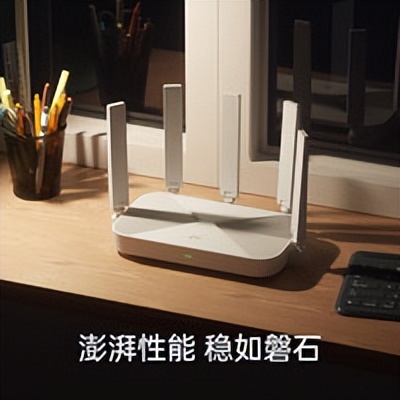
China's ZTE Corporation, in the field of routers, has always insisted on using processors developed and manufactured by itself. It is based on this situation that it has taken a proactive stance in controlling costs. The chips developed and designed by ourselves can deeply integrate hardware and software, thus eliminating the cost of purchasing core components from outside. For this reason, the cost of the entire machine can be reduced to a very low level. Such a strategy allows routers produced by ZTE to often provide more competitive hardware-related configurations at the same price.
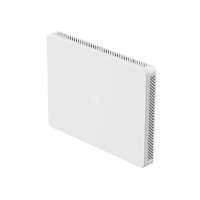
Although the absolute performance of self-developed processors is not necessarily top-notch, ZTE uses system-level optimization to make up for this shortcoming. They are good at using limited hardware resources and using software algorithms to improve data forwarding efficiency and signal stability. For ordinary families to surf the Internet, watch videos, etc., such balanced performance is sufficient, but it is more important to stabilize the connection at the peak speed.
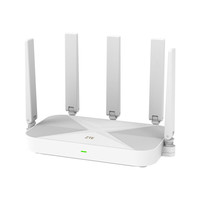
The balanced choice of the Sky Survey series
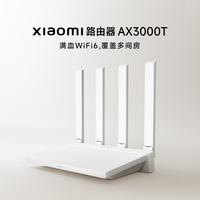
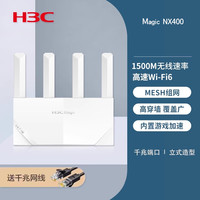
The main force in the mid-range market is the ZTE Xiantian series, which is usually equipped with a self-developed CPU and 256MB of memory. It is typically designed as a dual-band wireless chip integrating FEM. This chip is equipped with five built-in antennas and supports 3T3R multi-receiver and multi-transmit technology. This combination achieves a good balance between signal coverage and connection stability. It is very suitable for small and medium-sized apartments under 120 square meters.
The appearance design of this series presents a simple state, with almost no external antennas, and can be well integrated with the home environment. During actual use, it has reliable features in supporting multiple devices being online at the same time and working without interruption for a long time. For most home users whose broadband is within Gigabit, this is a very cost-effective option and has no obvious shortcomings.
Performance upgrades for Wentian and Qingtian
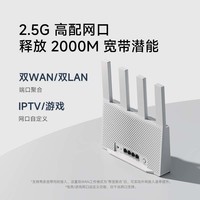
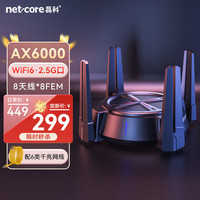
The Wentian series, which represents ZTE's higher technology integration, uses eight external independent FEMs and eight antennas to support more advanced 4*4 MIMO. It is usually equipped with 1GB of large memory and dual 2.5G network ports, which can fully unleash the potential of high-speed broadband and handle multi-device and high-load scenarios more calmly. It can be regarded as a concentrated expression of ZTE's mid-to-high-end technology.
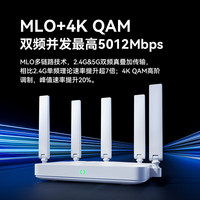
The Qingtian series has put a lot of effort into its appearance, using a built-in antenna design, and its styling has moved towards a more home-like trend. In terms of performance, it is relatively close to the Xuntian series. It mainly meets the user's "appearance" requirements for routers, and its performance can fully meet ordinary home scenarios. If there are no extremely high precision requirements for the speed of the network interface, and you just pursue aesthetics, this is a direction worth considering.
Competing products with different chip solutions
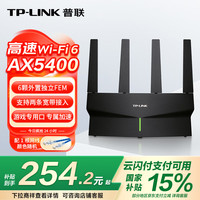
It is not ZTE, but routers using solutions from Qualcomm, MediaTek (Dafa) and other brands are extremely competitive. For example, some products using Qualcomm chips, which are equipped with external independent FEM and 2.5G network ports, have excellent signal stability and high-speed wired connections, and are especially suitable for small household users with broadband exceeding Gigabit.
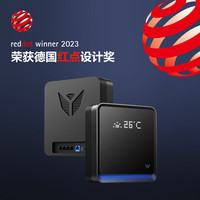
The products use Dafa chips, a subsidiary of MediaTek. Some are equipped with 512MB memory, and some are equipped with 2.5G network ports. They are also targeted at broadband users with Gigabit or above. The performance of these solutions each focuses on areas, some focus on emphasizing the strength of wireless signals, and some highlight the ability to operate multi-channel devices, giving users a variety of choices.
Early adopters of Wi-Fi 7 for the future
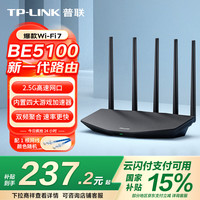
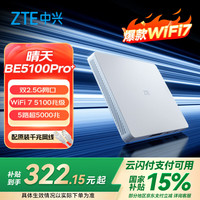
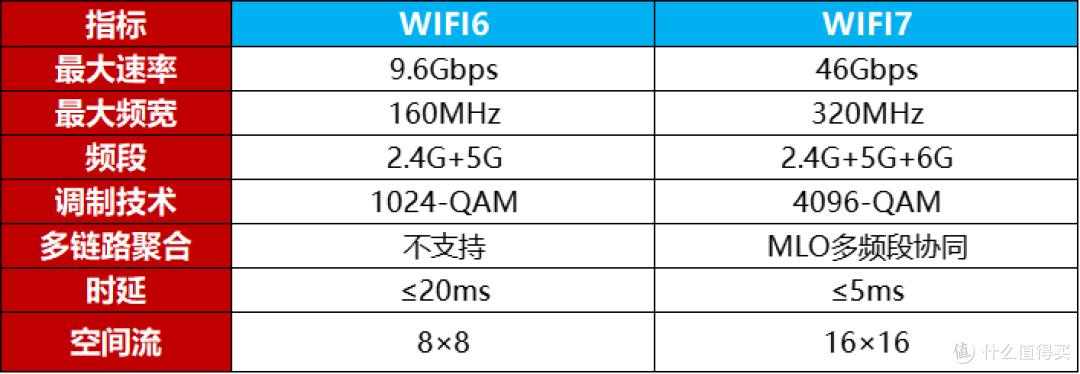
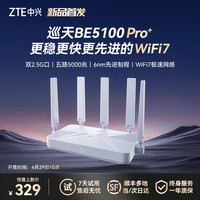
Some new products have already begun to support the Wi-Fi 7 standard, using brand-new self-developed CPUs and 512MB of memory. These new products usually follow the "2+3" antenna design and upgrade the network ports, such as adding two 2.5G network ports, thereby leaving space for high-speed transmission of the intranet and future broadband upgrades. This is suitable for users who want to experience new technologies in advance.
However, early Wi-Fi 7 routers may have trade-offs in some aspects. For example, some models are still equipped with only three Gigabit network ports. If there is no urgent need for a 2.5G network port, it may be more affordable to choose a mature Wi-Fi 6 product. Early adopters of new technologies require weighing budget and actual needs.
Considerations for high-end and specialty products
As budgets continue to increase, there will soon be products like ASUS that use materials to the extreme. For example, they are equipped with 2G memory and support multiple 2.5G network ports. They have a very large machine capacity. There are also routers that integrate smart home hubs and Bluetooth gateway functions. They meet the needs of users with a large number of Mijia devices and achieve the integration of network and intelligent control.
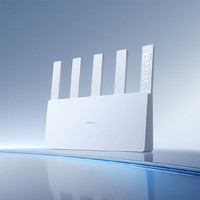
At this price point, products like Huawei have appeared, which focus on design and number of interfaces, such as being equipped with multiple 2.5G network ports. The selection of these products often goes beyond basic network needs and is mostly based on brand preference, special functions or design considerations. For ordinary families, mid-range balanced products are generally sufficient.
When you are choosing a router, the first important factor to consider is the signal coverage, the degree of stability, or whether the technology will not fall behind in the next few years?