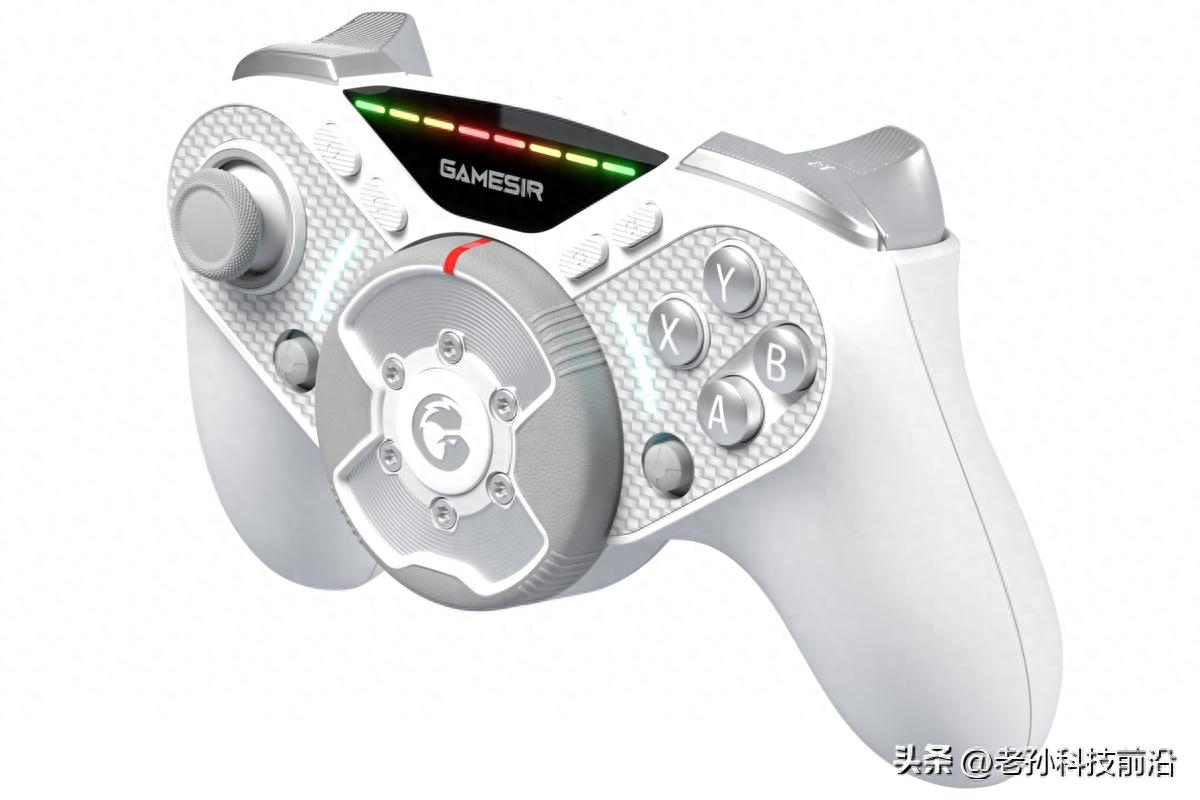
Racing simulation devices are becoming more compact, with a miniature steering wheel embedded directly in the center of the handle. Can such a design produce a real force feedback effect? For those gamers who are dedicated to pursuing an immersive experience, this is undoubtedly a new trend worthy of attention.
Innovative design of mini steering wheel
The biggest breakthrough of Swift Drive is that it integrates a miniature steering wheel into the central area of a standard game controller. This integration is carried out directly. This design is different from large steering wheel peripherals that require additional fixation. With this design, players can directly hold the controller to play racing games. The steering wheel body uses a detachable structure, so users can replace the dial with different styles according to their own preferences. The replacement of the dial increases the personalization and playability of the device.
It claims to use the world's smallest direct-drive motor to give force feedback, which is its core. This shows that the motor inside the steering wheel will generate resistance in real time to simulate various road sensations encountered when a real vehicle turns, such as changes in tire grip or vibration when driving over a road shoulder. This kind of direct physical feedback is expected to bring the immersion of handheld racing games to a whole new level.

High-precision sensing and adjustable range
Swift Drive is equipped with a high-precision Hall effect sensor, aiming to achieve precise control. This non-contact sensor has a resolution of 65,000 levels, which can capture extremely sensitively and reduce input delays. It captures tiny rotations of the steering wheel. The overall rotation angle of the steering wheel can be freely adjusted between 30 degrees and 1080 degrees.
For players, the steering ratio can be adjusted according to different racing types. For example, when the player is driving a go-kart, he or she can choose a steering angle of up to 30 degrees to obtain a more direct control feeling; however, when the player is simulating an F1 or GT racing car, he or she can set it to a wider range of angles to better match the steering characteristics of a real racing car. This flexibility spans the spectrum of gaming needs from arcade to simulation presentation.
Comprehensive tactile feedback system
Except for the force feedback of the steering wheel, other input parts of this device have been carefully designed. The joysticks and buttons also use Hall effect sensors to ensure durability and accuracy for long-term use. What's particularly critical is that the handle's linear trigger key is equipped with an independent tactile motor.
This independent motor can simulate the high-frequency springing feeling when the anti-lock brake system (ABS) is working, and can also simulate the slip and vibration caused when the wheels have no grip. This multi-level tactile feedback combination is designed to allow players to perceive rich vehicle dynamic information with their fingers to enhance their judgment of the race situation.
Wireless connectivity and long-lasting battery life
Swift Drive uses 2.4GHz wireless technology to connect to computers. It connects to game consoles, thus avoiding the limitations of wires. When activating all functions on the device, the functions mentioned here include responsive RGB lighting effects and multiple tactile motors. Officials claim that its battery life after a single charge is approximately 20 to 30 hours.
For long gaming sessions, this battery life is quite sufficient, and it reduces the trouble caused by frequent charging. Wireless connection allows players to play games more freely on the sofa in the living room. Players do not need to be restricted by the distance between the steering wheel base and the host, thus improving the convenience and comfort of use.
Desktop Companion Turbo Drive
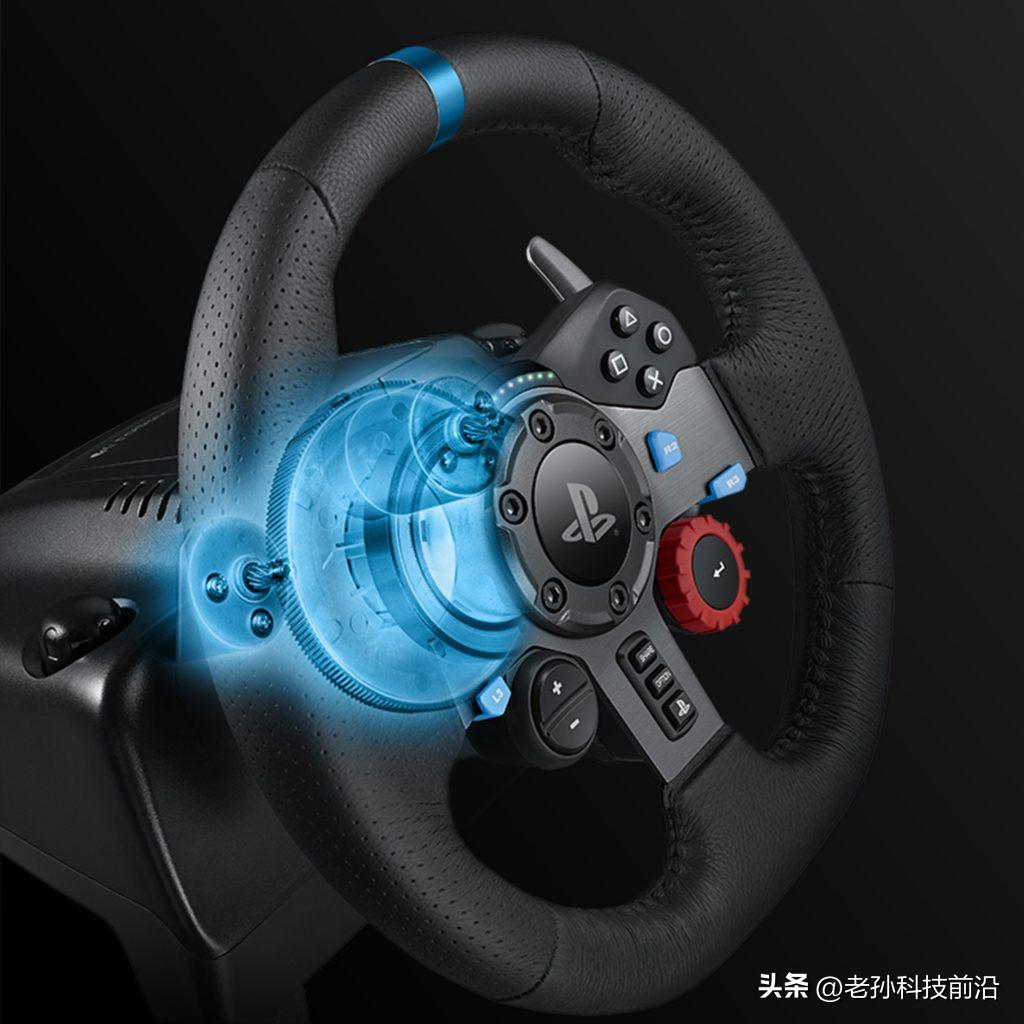
For those players who pursue a more traditional and professional experience, the manufacturer also launched a desktop clamp-on steering wheel called Turbo Drive at the same time. It uses a yoke-shaped disk, which can be directly fixed on the table with the help of clamps, and is equipped with independent accelerator and brake pedals, thus forming a control combination that is closer to real driving.
It shares some core technologies with Swift Drive, such as 2.4GHz wireless connection, Hall sensors and highly customizable software arrangements. Both support parameters such as steering angle limit and force feedback intensity through software, allowing players to make in-depth adjustments based on personal habits and different games.
Unique turbofan enhanced experience
The most eye-catching feature of the Turbo Drive is that it has a built-in turbo fan. When the player is traveling at high speed in the game, the fan can be turned on to allow the airflow to blow directly to the face and hands. The somatosensory wind pressure brought by the increased speed enhances immersion from another sensory level.
This innovative feature will inevitably consume extra power. When the fan is turned on, the battery life of the device will be reduced to almost 15 hours; however, if the fan is turned off, the battery life can be extended to about 50 hours. Players can make a trade-off between "ultimate body feeling" and "longer battery life" based on their own gaming scenarios.
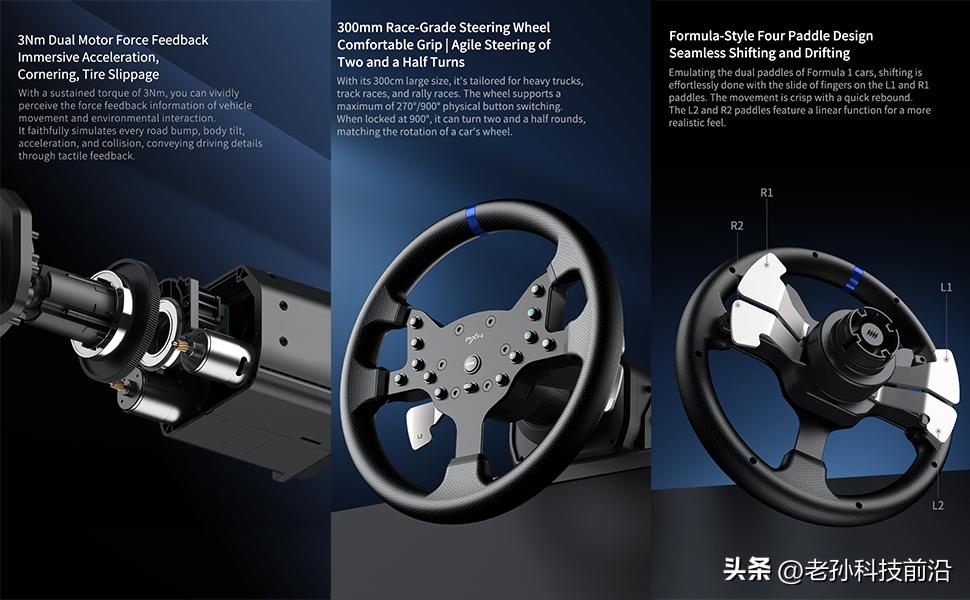
As far as the emergence of these two products is concerned, they can provide racing game players of different levels and with different preferences with a new hardware choice. Starting from the integrated portable handle to the desktop device that enhances the sense of motion, do they indicate that racing simulation peripherals are developing in the direction of more personalization and more multi-sensory integration? Which form of innovative equipment are you more looking forward to trying, and why? Welcome to share your views in the comment area. If you feel that the analysis is useful, don’t forget to like and forward it.