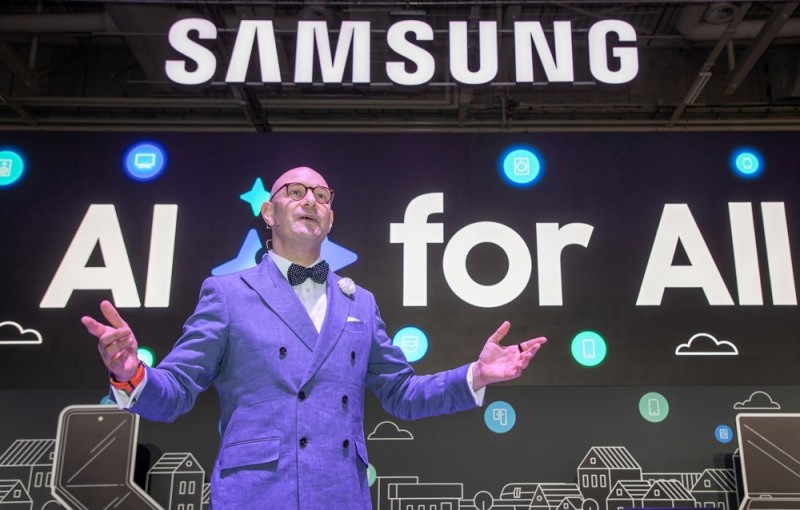
Samsung once again made a promise to make AI available to everyone. However, data shows that there are still only a few people who truly understand how AI can change lives.

The vision and reality of popularizing AI
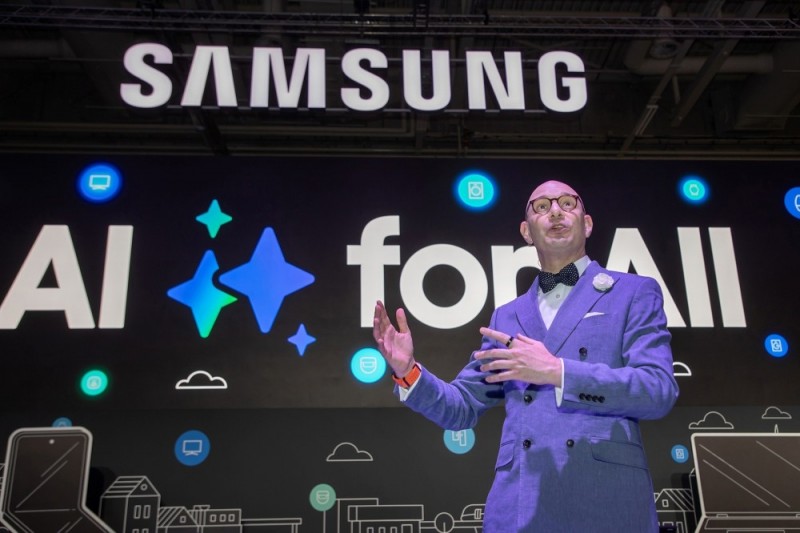
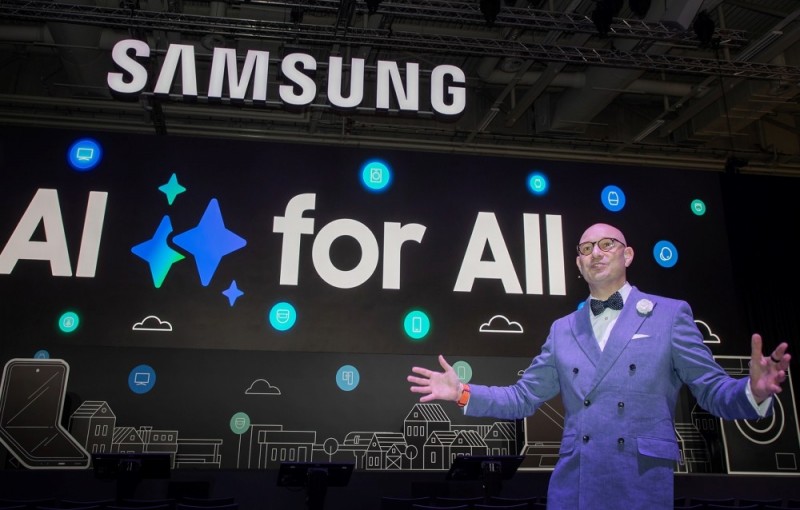
Samsung once again reiterated its vision called "AI for All" in recent public events. This concept is to integrate technology in the field of artificial intelligence into all of its product lines, whether it is mobile phones or home appliances, in order to make users' lives more convenient. However, market surveys show that only 15% of consumers think they can fully understand the use of artificial intelligence in daily life.
This cognitive gap is precisely the core challenge faced by technology companies like Samsung. The vision needs to be implemented into specific functions that consumers can perceive and operate easily to achieve true popularization. Otherwise, no matter how advanced the technology is, it will most likely be out of touch with public life.
Decentralization of AI functions for mobile devices
In order to bridge the cognitive gap, Samsung plans to use software updates to promote the AI functions in the latest folding screen phones to more older models. For example, the latest One UI 6.1.1 system will bring tools such as real-time call translation and instant search to users of the S24 series and the previous generation of folding screen phones.
Due to this move, the threshold for experiencing cutting-edge AI functions has been lowered, and users do not need to replace hardware frequently. Through system upgrades, old devices can also acquire new wisdom, which is helpful for more people to truly feel the efficiency improvements brought by AI in daily scenarios such as communication and search.
Intelligent upgrade of home entertainment
In the field of home entertainment, Samsung has launched a new brilliant laser projector, which is intended to transform the living room into a cinema. At the same time, the Tizen system installed on its TV products has also started an upgrade plan, allowing TVs including 2023 models to continue to obtain new features.
These upgrades have enhanced the interconnection experience between devices. Users can enjoy more personalized content recommendations and high-quality audio and video on the big screen. AI plays the role of "smart housekeeper" here, optimizing the home entertainment experience by learning user preferences.
Convenience and autonomous control of home appliances
More intuitive interactions reflect the intelligence of home appliances. For some refrigerators and washing machines, Samsung has added automatic door opening functions. Users can open the doors with just a light touch. This design may seem simple, but it directly reduces the minor burdens involved in daily housework involving bending and exerting force.
What is more critical and highlighted is that artificial intelligence enables the operation of home appliances to become more autonomous and efficient. For example, the washing machine can automatically identify the specific material of the clothes and select the relevant washing program, and the refrigerator can manage the ingredients inside it. These functional functions free users from complicated and trivial settings.
The combination of AI and energy conservation and environmental protection
Samsung emphasized that its artificial intelligence development route is closely linked to environmental protection goals. The company plans to achieve net-zero emissions by 2050. Currently, 93% of its device experience department uses renewable energy, and artificial intelligence technology has become a key tool to achieve energy conservation.
Speaking of specific products, such as the built-in AI energy-saving mode of the refrigerator, it can sense usage habits and then use intelligent means to adjust the working status of the compressor. As for the washing machine, it can accurately control the water and electricity consumption according to the amount of clothes. Such fine adjustments can save considerable energy in the long run.
Future challenges and directions
Although the blueprint is clearly visible: there is still a long way to go before “AI for All” can be transformed from a slogan into something that hundreds of millions of users around the world come into contact with on a daily basis. The realization of inclusive benefits through technology is not only related to function push, but also involves user education, privacy and security, and the adaptation of infrastructure in different regions.
Reaching the 2030 operational-level net-zero emissions target is very challenging, and this situation requires AI to play a more important role in improving product energy efficiency. As for whether Samsung's practice can become an industry benchmark and truly benefit every user, it still needs time and market verification.
For AI technology to be integrated into our daily lives like water and electricity, do you think the biggest bottleneck hindering it is the cost of hardware, the difficulty of use, or the widespread concerns about privacy and security? You are welcome to express your opinions in the comment area. If you think this article is inspiring, please give it a like and support.