
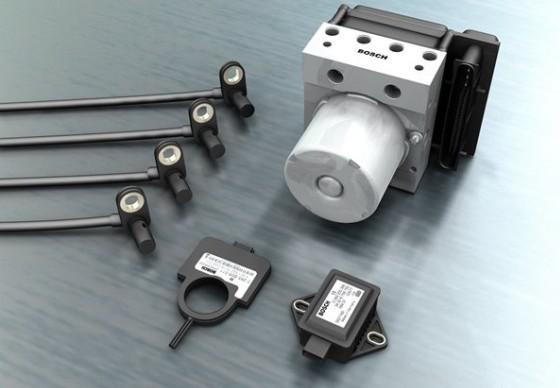
Many consumers regard ESP as a "hard indicator" of car safety, and it has even become a watershed in judging whether a car is honest. Can this big hat called "safety" really fully define the entire safety performance of a car?
How the electronic stability system works
The core function of ESP is to proactively correct the vehicle's driving trajectory. It uses sensors all over the vehicle body to continuously monitor the steering wheel angle, wheel speed, and vehicle body yaw status. When the system detects that the actual driving direction of the vehicle deviates significantly from the driver's intention, such as a drift when turning on a slippery road, it will quickly intervene.
Specifically targeted braking of a single wheel or multiple wheels is an intervention method, and may simultaneously request the engine to reduce torque output. The purpose of this series of actions is to generate a torque in the opposite direction to the direction of loss of control, and use this torque to pull the vehicle back on the correct trajectory. Simply put, it helps you "break" the steering wheel at the critical point where you are about to lose control.
Not unique to Bosch

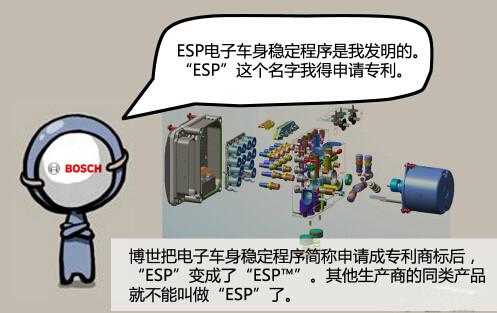
Some such systems are not called (ESP) in the market. (esp) is the registered trademark of the German Bosch company for its electronic stability program. Because it is a patented name, only models equipped with Bosch systems are allowed to use the name (esp). This has caused many consumers to misunderstand and think that systems not called (esp) are not similar systems.
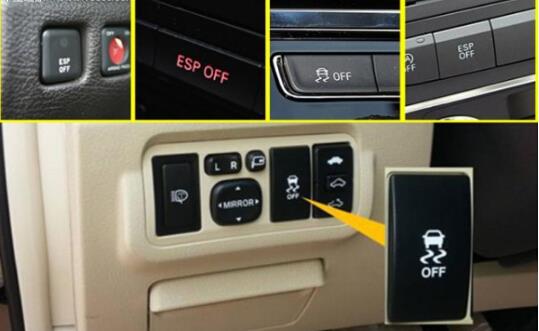
In fact, major automobile manufacturers and parts suppliers around the world have developed systems with similar functions. For example, Toyota and Lexus call it VSC, Honda and Acura use the name VSA, Nissan and Infiniti name it VDC, and BMW gives it the name DSC. Although there are differences in names and calibration details, the underlying purpose and basic functionality are roughly the same.
Real-life scenarios of safety effects

This system mainly works in two extreme situations. One is when changing lanes urgently to avoid obstacles, it can inhibit the vehicle from slipping, thereby helping the driver maintain control of the vehicle. The other is in curves, especially when the road adhesion is lacking, it can correct understeer or oversteer caused by excessive vehicle speed.
But it needs to be clear that the prerequisite for it to work is that the tires still have grip and the vehicle's dynamic situation is not completely out of control. It is a device with corrective and auxiliary functions, and its actual effect is strictly limited and restricted by physical limits. If the vehicle speed is too fast and the steering is too sharp, exceeding the limit of friction between the tires and the ground, then no electronic system can violate the laws of physics.
All risks that the system cannot cover
The electronic stability system focuses on vehicle dynamic stability, but it cannot prevent various traffic accidents. For example, in common daily rear-end collisions, in frontal collisions, and in side collisions, its direct effect is extremely limited. These collision safety mostly rely on the design of the body structure, the strength of the materials, and restraint systems such as seat belts and airbags.
It also lacks the ability to prevent collisions that are directly caused by drivers being distracted, fatigued, or misjudgment. It tends to be like a "specialized coach" dedicated to preventing the vehicle from rolling over or sliding sideways, and is not the kind of "all-round bodyguard" that can prevent all accidents.
Drivers are the core of safety
The effectiveness of any safety technology that is in a leading position and has proactive characteristics is based on the driver's operation in a standardized manner. If the driver is speeding, driving under the influence, or engaging in reckless merging behavior, then it will be difficult to ensure safety no matter how many electronic systems there are. The time when the system comes into play is limited to when the driver makes a wrong operation, and what it provides is just an additional layer of remedial opportunities.
The fundamental source of the actual driving safety situation comes from the driver's ability to comply with traffic regulations, maintain a high degree of concentration at all times, and have excellent pre-judgment of risks. Technical equipment is an important "item that adds advantages" and a "network with support functions", but it cannot replace the driver's own responsibilities and decisions. Placing safety unwaveringly and 100% on electronic systems is a dangerous perception in itself.
Treat configuration and security rationally
When consumers choose a vehicle, they should regard the electronic stability system as a very important active safety configuration. Especially if the budget permits, they should give priority to models equipped with this feature. Judging from the mandatory regulations in the European and American markets and a large amount of research data, it is really true that it can effectively reduce the risk of bicycle accidents.
However, at the same time, it cannot be deified, and it cannot be denied as a whole based on the lack of this configuration alone. Vehicle safety is a system engineering project, covering many different dimensions such as active and passive safety design, manufacturing processes, regular maintenance, and driving habits. Only by comprehensively considering all these factors can we make a more rational judgment.
When you choose a car or use a car, do you simply exclude a car because it is not equipped with ESP (or its equivalent system)? Welcome to share your views.