There are many car owners who regard the merging assist as a "talisman" when changing lanes. However, if you rely too much on this technology, it may actually put you in a more dangerous situation.
How parallel assist works
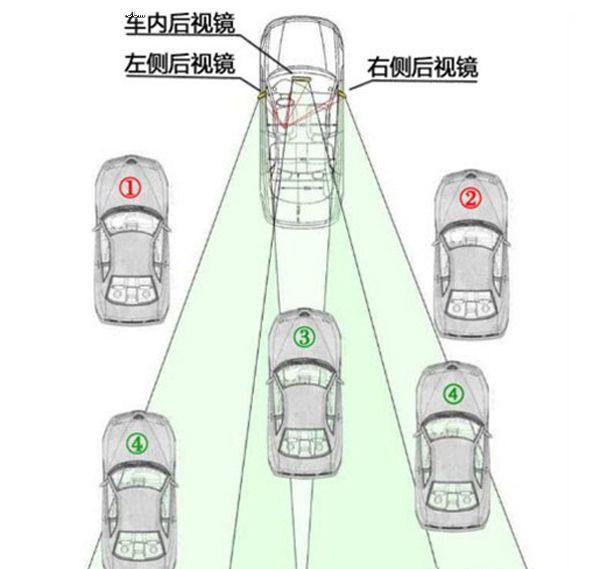
When the parallel assist system works, it is usually achieved by installing radar or ultrasonic sensors on both sides of the rear bumper of the vehicle. These sensors continuously monitor moving targets within a certain distance and within a certain speed range on the side and rear of the vehicle, and this moving target usually refers to vehicles in adjacent lanes.
Once the system detects that a vehicle has entered the blind spot, it will alert the driver through light icons on the rearview mirror, sounds or steering wheel vibrations. This is how this system, which is designed to effectively assist drivers with limited vision and is especially designed for high-speed driving and multi-lane environments, works like this.
Inherent usage limitations of the system
At the same time, the vehicle merging assist function is not applicable at any time and in any scenario throughout the day. Most systems have a clear activation speed threshold. For example, the vehicle speed needs to exceed 30 kilometers per hour or 60 kilometers per hour before it can be activated. This means that in slow-moving traffic in urban congestion, the system may be completely turned off.
The detection range of the system is limited. For vehicles that are rapidly approaching the vehicle, as well as smaller targets such as motorcycles and bicycles, there is a possibility of detection delays or omissions. It has no way to judge the intentions of the driver of the vehicle behind, such as whether the other party is willing to let you merge.
Severe weather and physical disturbances
Those who are extremely susceptible to interference from the external environment are the sensors of the system. Heavy rain, heavy snow and dense fog will seriously attenuate the detection ability of radar waves, causing system failure or false alarms. If the vehicle body sensor area is covered with mud, snow or ice, its function will be greatly reduced.

Even ordinary dirt, like mud splashed after a rain, may temporarily obscure the sensor, causing the driver to lose this safety protection without realizing it. At this time, if you blindly believe that the system is safe without alarms, the risk of accidents will increase dramatically.
Driving inertia that easily develops
Frequent reliance on electronic assistance can easily cause drivers to become psychologically dependent, and then gradually ignore the basic operations of actively observing the rearview mirror and turning their heads to check blind spots. Once this habit is developed, the driver's active safety awareness will tend to fade.
At critical moments, such as when a sudden system failure occurs or there is a situation that delays the alarm, the driver is not used to manually confirming and does not respond promptly enough, which can easily lead to a large increase in the probability of accidents. Technology needs to be regarded as an auxiliary means, rather than replacing the driver's personal judgment and careful observation.
Unable to deal with complex traffic games
A dynamic, game-rich environment is road traffic. The merging assist can only tell you "there is a car", but it cannot predict "whether to give or not". In reality, many accidents are caused by the car in front forcibly changing lanes and the car behind deliberately not accelerating.
Even if the system sounds an alarm, if the person behind the wheel is someone who exhibits road rage behavior or is not paying attention to driving, there is still no way to avoid the collision. The final decision-making power to safely change lanes lies in the driver's comprehensive judgment on the overall driving status of the vehicle and the thoughts of other vehicles, which is something that machines cannot currently replace.
Develop safe merging habits
The safest approach is to regard the merging assist as "another pair of watching eyes" rather than a unique reliance. Before changing lanes every time, you must implement standard procedures. First check the rearview mirror in the car, then look at the side rearview mirror, and finally quickly turn your head to scan the visual blind spots on the side and rear. After confirming that there is no error, turn on the turn signal and execute the steering smoothly.
For drivers, they should regularly understand the capabilities and boundaries of their vehicle's assistance systems. Then, pay attention to the working status of the assistance system under different road conditions and weather conditions. Keeping the sensors on the side of the car clean is also a basic maintenance measure to ensure that they can function properly.
When you usually change lanes, do you completely trust the alarm prompts given by the car, or do you firmly rely on yourself to look back to confirm the blind spot situation? You are welcome to share your own experiences and opinions in the comment area. If you think this article is useful as a reminder, please also like it and share it with more friends.